
The first competency concerns written composition and the ability to communicate one’s ideas coherently. The challenge of organizing and getting ideas down on paper primarily involves language skills, including organization, imagery, memory, encoding (spelling), and understanding of punctuation and grammar.
Comprised of the visual-motor-spatial skills, which allow a student to produce legible written work, often called penmanship consistently.
When a student has difficulty with the print production of writing, it is called dysgraphia. For children with dysgraphia, writing can be a frustrating task, often marked by poor letter formation and handwriting. This, in turn, can make it cumbersome and slow to get their ideas onto the page.
Some learners struggle with one competency, while others struggle with both. Either way, Hands on Learning Solutions can support your child in improving their writing with a variety of approaches, customized to the individual learner’s needs.
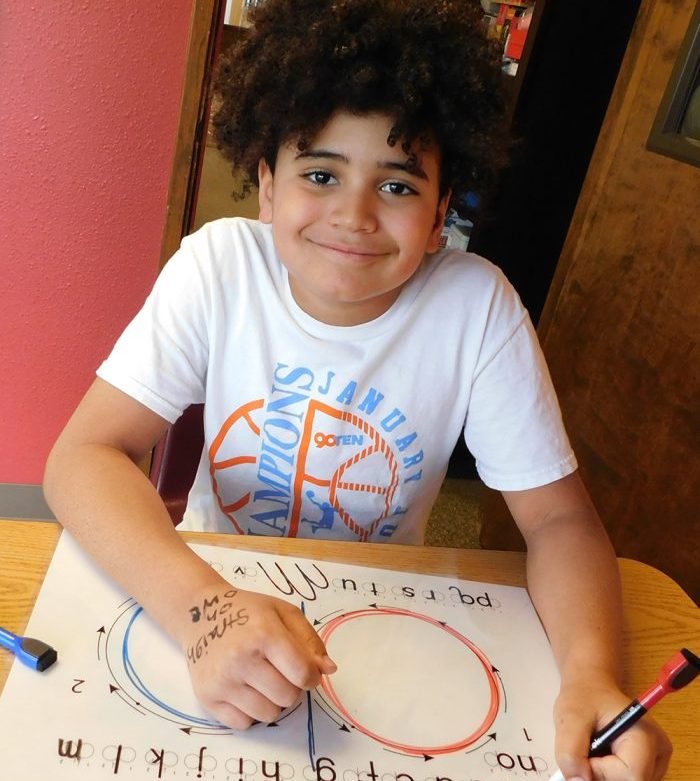


One of the things I love most about HOLS is their mindset. They don’t see learning differences as obstacles; they see them as superpowers. That message has resonated deeply with both of us. Silas actually looks forward to his time at HOLS because he understands how it’s helping unlock his potential. He’s been met with love, care, and unwavering support, and the progress is more than we could have hoped for.